Faces of the Atlas
Attila
The scourge the walls held back
- Born
- c. AD 406
- Died
- AD 453
- Origin
- The Hunnic Empire, Danube plains (modern Hungary)
Leading the Hun invasions of the Balkans and Italy that shook both halves of the Roman Empire
Early Life
Start with what we do not know, because with Attila that is the honest place to start. No record of his birth survives; the year usually given, around AD 406, is a modern estimate, not an ancient fact. The Huns themselves left no writing at all — everything we know about them comes through Roman and Greek eyes, from people who feared them, fought them, or paid them.
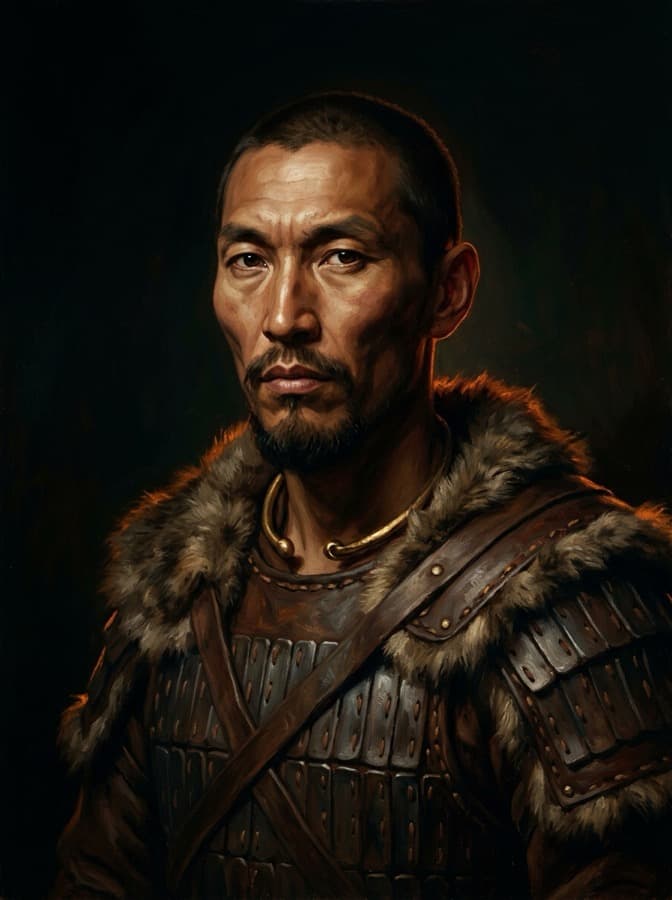
The best of those eyes belonged to Priscus of Panium, a diplomat who travelled to Attila's court in 449 and dined at his banquet. Priscus left a written account of the man and his court — but no portrait of Attila made in his lifetime exists. No bust, no coin, nothing from life. Every face of Attila you have ever seen is a later artist's invention.
What the sources do establish is where his power sat and how he came to wield it: Attila ruled the Hunnic Empire from the Danube–Tisza plains, at first jointly with his brother Bleda — the two led the first great war on the Eastern Roman Empire together — and by 447 he ruled alone. From that seat he commanded something Rome had never faced before: a steppe empire on its doorstep, rich on Roman gold and fast on Roman roads.
The First Balkan War
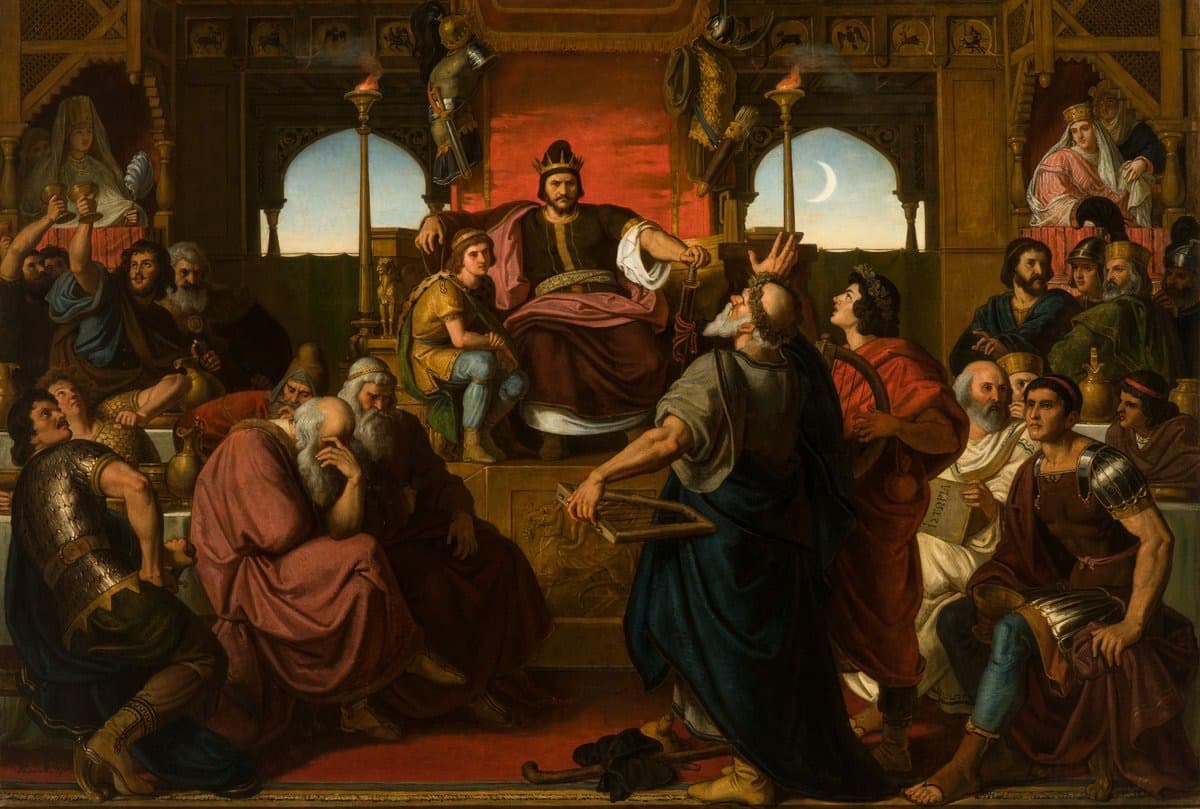
The first war, in 441–443, began with a scandal worthy of its own page: the bishop of the frontier town of Margus was accused of crossing the Danube to rob the graves of Hun kings. When the Huns demanded him, the bishop saved himself by betraying his own city to them. So Priscus tells it — and with Margus open, the Danube frontier came apart.
The cities of the river road fell one after another: Sirmium, a former imperial capital; Singidunum, where Belgrade stands today; Viminacium, a legionary base whose destruction archaeology has confirmed; Ratiaria, home of the Danube fleet and an arms factory. Then the Huns turned down the great military highway toward the heart of the Balkans.
At Naissus — modern Niš, birthplace of Constantine the Great — Priscus describes the siege that announced a terrifying new fact: the Huns, the horse-archers of the steppe, had learned siegecraft, bringing up battering rams and rolling towers against a walled Roman city. Naissus fell, and Serdica (modern Sofia) was sacked after it — so thoroughly that when Priscus's embassy camped there six years later, it still lay in ruins. One date to flag honestly: most historians place the fall of Naissus and Serdica in this first war, 441–443, but a scholarly minority redates them to 447. The wreckage is certain; the year is argued.
The Walls That Held
On 27 January 447, an earthquake threw down stretches of Constantinople's Theodosian Walls, including fifty-seven towers — with Attila, now sole ruler, already moving. What followed is the hero fact of this whole story. The city's prefect, Constantinus, drafted the Hippodrome's chariot-racing fan factions, the Blues and the Greens, into a labour army and rebuilt the walls in about sixty days. We know because chronicles say so — and because three inscriptions survive on the walls themselves. One brags that even the goddess Pallas could scarcely have built so fast; the Greek text adds that even Attila could not take them. The sixty days is the builders' own claim, so enjoy it with a wink — but the stones and their boast are still there in Istanbul.
Attila's 447 campaign smashed everything in the open. A Roman field army met him at the Utus river and was defeated — its general, Arnegisclus, fighting on foot after his horse was killed under him. Marcianople was stormed and destroyed. A contemporary wrote that "more than a hundred cities" fell that year, though he names almost none of them.
Then came the moment the map on this site is built around. Attila approached Constantinople — and there was no siege. He looked at the rebuilt walls and turned aside. The campaign's real final battle came in the Thracian Chersonese, near Gallipoli, and Hun raiders ranged as far south as Thermopylae, but the city itself was never touched.
The price of the Balkan wars survives in Priscus: the peace the diplomat Anatolius negotiated after them was reckoned in gold — 6,000 pounds of it immediately, the annual tribute tripled to 2,100 pounds, and twelve gold solidi owed for every escaped Roman prisoner. Tradition attaches those terms to the peace of 443, after the first war; a minority of scholars redates them to the settlement after 447. Either way, Priscus claims senators sold their wives' jewellery to pay — hostile rhetoric, best taken as colour. Modern historians reckon the empire could afford the gold; it was the humiliation that stung.
The Road to Rome That Wasn't
Attila then turned west. In 451 he invaded Gaul and was fought to a halt at the Catalaunian Plains by a Roman-Gothic coalition — though how real a "victory" that was for Rome is something historians still argue about. The next year he came for Italy itself, over the Julian Alps by what was almost certainly the old military road — no source names the pass.
Aquileia, the fortress city guarding the road into Italy, held him for about three months before it was taken and destroyed so completely that it never recovered its former rank. The Romans told a story about its fall — that Attila, ready to give up, saw storks carrying their chicks out of the city and read it as an omen that Aquileia was doomed. It is a legend, but a legend with a pedigree: it was already circulating within a century of the event. From there the sources get honest in an interesting way: Jordanes, our main account, names only Aquileia, "the remaining cities of the Veneti," Milan and Pavia. The long, familiar list of every sacked town in northern Italy comes from Paul the Deacon — writing three centuries later.
Milan, an ex-imperial capital, gave the campaign its sharpest anecdote. Attila found a painting there of enthroned Roman emperors with dead steppe nomads at their feet — and ordered it repainted, with himself on the throne and the emperors pouring out gold before him. The story goes back to a contemporary who actually met Attila, which is as good as it gets for a tale like this; call it probable, and note the precision: the throne is in the picture. No source ever puts him on an emperor's actual throne.
And then, with Rome open before him, he turned around. The famous version credits Pope Leo, who met Attila near the Mincio river with two senior senators, Avienus and Trygetius — a meeting that genuinely happened, recorded by a contemporary. But the fuller consensus stacks the reasons: plague and famine were ravaging Italy, the Eastern emperor Marcian had sent an army across the Danube to attack the Hun homeland — probably the decisive blow — and Attila's own forces were spent after the long siege. Leo's embassy may have mattered most as a dignified exit. The version where Saints Peter and Paul appear over Leo's shoulder with drawn swords is medieval legend, gorgeously painted by Raphael a thousand years later. So is "Attila's refugees founded Venice": people from Aquileia did flee to the lagoon, but most went home; Venice was born of two more centuries of invasions, with Attila as its legendary first chapter.
Death & Legacy
Attila died in 453, at home on the plains, on the night of his wedding to a woman named Ildico. The account that goes back to Priscus — our best source — says he suffered a haemorrhage in the night, and was found dead at dawn beside his weeping bride. A darker rumour later attached to the story — first written down by Marcellinus Comes some eighty years on: that Ildico had killed him. That version is rumour and legend — but it proved unkillable, flowing centuries later into the Nibelungenlied, the great Germanic epic. The tale of his burial in a triple coffin of gold, silver and iron, with the gravediggers killed to keep the secret, is funerary legend too. What is true is the ending the legend was written to explain: his grave has never been found.
His name outlived everything else — a byword for terror out of the steppe, kept alive by chroniclers and epics for fifteen centuries. And yet the walls won. The Theodosian Walls he turned away from in 447 still stand in Istanbul, their rebuilders' boast still legible: even Attila could not take them.
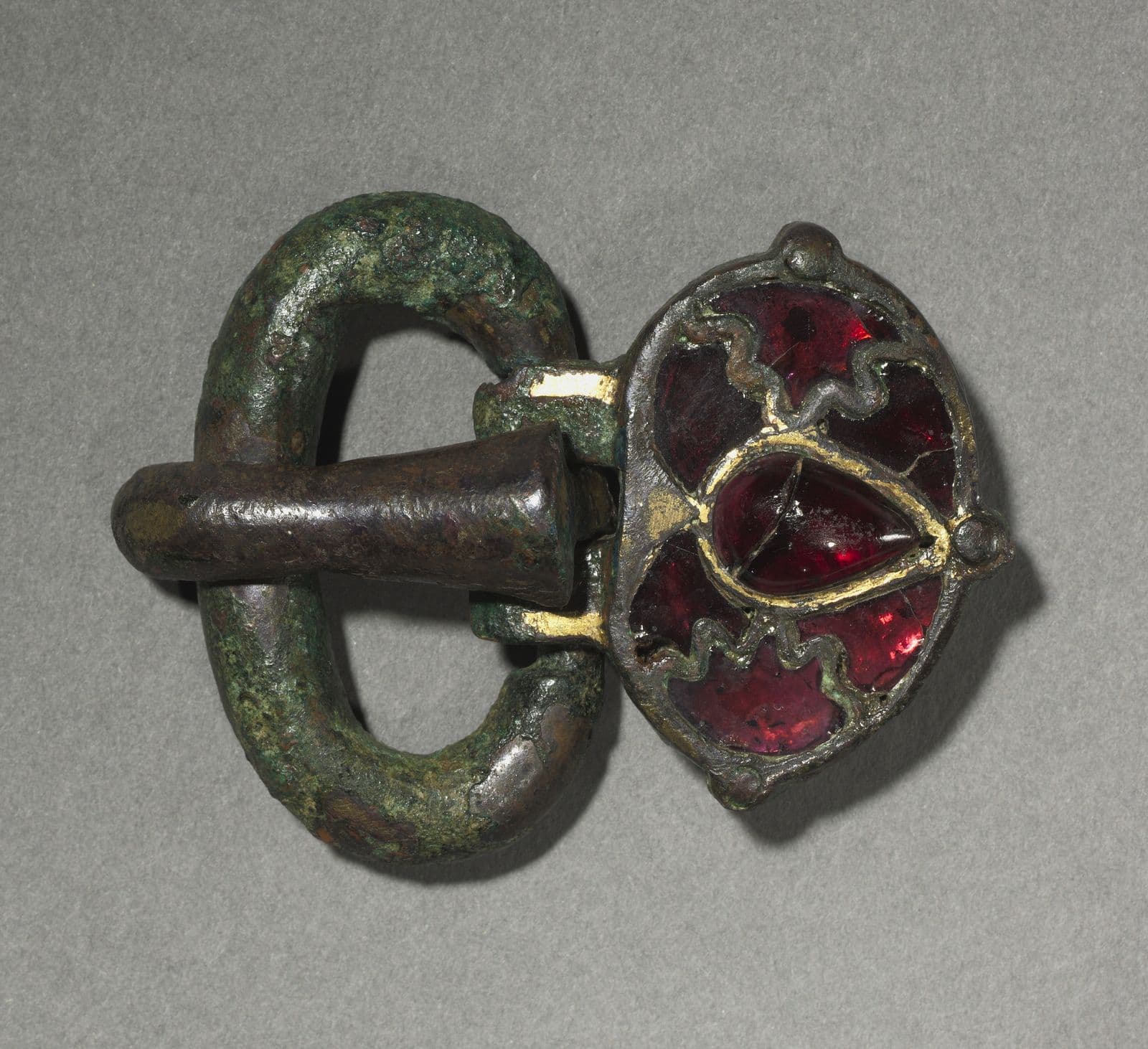
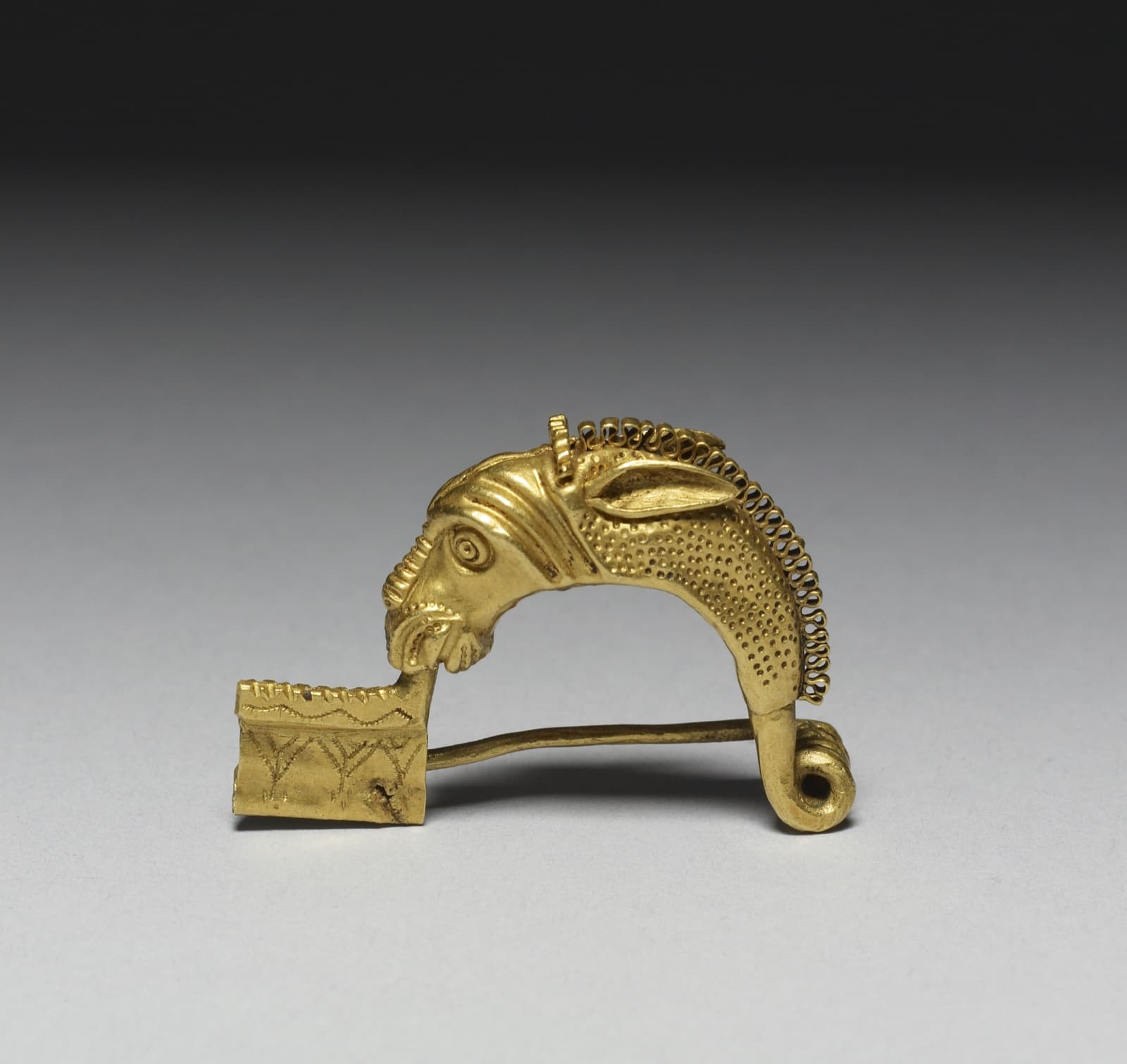
Which brings this page back to where it started. The man who shook two empires left no image of himself, and his people left no words. The Huns speak to us through Roman ink and through their own gold — horse-head cloak pins, garnet-studded buckles — and Attila's face is whatever each century has needed it to be.