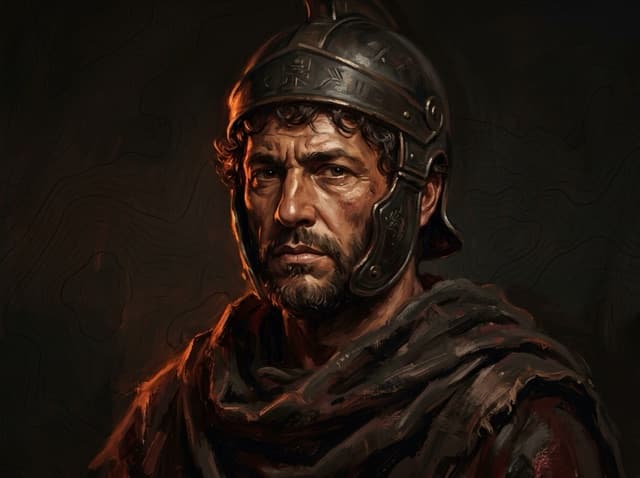
Faces of the Atlas
Hannibal Barca
The man who taught Rome fear
- Born
- 247 BC
- Died
- c. 183 BC
- Origin
- Carthage (modern Tunisia)
Crossing the Alps with war elephants to invade Roman Italy
Early Life
Hannibal was born in Carthage, the great Punic trading city in modern Tunisia, in 247 BC — a year no birth record confirms, but one nearly every modern scholar accepts, back-calculated from Polybius, who says Hannibal was nine when his father left for Spain in 237 BC. That father was Hamilcar Barca, the general who had fought Rome to a standstill in Sicily during the First Punic War, and who watched Carthage lose it anyway.
Hamilcar rebuilt Carthaginian power in southern Spain, and he took his eldest son with him. Hannibal grew up in the army camp — his classroom was the parade ground, though the education was partly Greek too: a Spartan tutor named Sosylus travelled with him and later wrote a history of his campaigns, now lost. When Hannibal's brother-in-law Hasdrubal was assassinated in 221 BC, the army acclaimed Hannibal commander-in-chief on the spot. He was about twenty-six.
Then there is the oath — the most famous story of his childhood, and one to handle with care. Nine-year-old Hannibal, the tale goes, swore at an altar never to be a friend to the Romans. It comes from our best sources, Polybius and Livy — but Polybius admits Hannibal told the story himself, decades later, in exile at a foreign court, at exactly the moment he needed to convince a suspicious king of his lifelong anti-Roman credentials. Some historians accept a real childhood oath; others call it propaganda, his or Rome's. It is the legend that defined his myth. It is not a fact.
One more thing to know before any of what follows: not a single word written by a Carthaginian survives. Everything we know about Hannibal comes to us through the words of his enemies.
The Journey
In spring 218 BC, Hannibal marched out of New Carthage — modern Cartagena in Spain — with a large army and a plan Rome never saw coming: instead of waiting to fight at sea or in Spain, he would walk to Italy. He crossed the Pyrenees, ferried his war elephants over the Rhône on rafts, and in late autumn took the army up into the Alps — about fifteen days of snow, cliffs, and running fights with the mountain tribes.
The cost was staggering. Polybius, who interviewed eyewitnesses and walked parts of the route himself, says Hannibal came down into Italy with 20,000 infantry, 6,000 cavalry and a few dozen surviving elephants — roughly half the force that had entered the mountains. Livy adds the famous scene of soldiers splitting a blocking rock with fire and vinegar; it appears only in Livy, and is best enjoyed as colour rather than trusted as fact.
Which pass did he use? Nobody knows. Polybius never named it, and historians have argued for centuries between several candidates — one team even found a churned-up sediment layer at the Col de la Traversette dated to about 218 BC, suggestive but nowhere near proof. The mountains keep the secret. And the image of a great elephant herd thundering over the peaks deserves a correction too: thirty-seven elephants are attested back at the Rhône, most of the survivors died in Italy's first winter, and by 217 BC just one remained — Surus, "the Syrian," which Hannibal himself rode.
Wars & Achievements
What followed was the most devastating run of victories any enemy ever inflicted on Rome. At the river Trebia, in December 218 BC, Hannibal lured a Roman army across freezing water before breakfast, then sprang an ambush force under his brother Mago and destroyed it. Six months later, at Lake Trasimene, he hid his entire army in the hills above a fog-bound lakeside road and annihilated the army of the consul Flaminius, who died with his men. Historians still describe it as the largest ambush in ancient military history.
Then came Cannae, on 2 August 216 BC — the battle that made his name immortal. Hannibal let his centre of Spaniards and Gauls sag deliberately backwards, drawing the largest Roman field army yet assembled into a pocket; his African veterans folded in on the flanks, his cavalry sealed the rear, and the encirclement closed. The sources disagree on the toll — perhaps 50,000 to 70,000 Romans killed in a single afternoon. Livy has Hannibal's cavalry commander Maharbal complain afterwards, "You know how to win a victory, but not how to use one" — a line so polished, and found only in Livy, that it belongs on the legend shelf.
Cannae broke armies but not Rome. The Republic refused to negotiate, raised new legions — enrolling even enslaved men — and switched to attrition, shadowing Hannibal and refusing pitched battle. He stayed in Italy for fifteen years, undefeated in the field, but he never took Rome itself and was slowly starved of reinforcements. When his brother Hasdrubal finally marched a relief army over the Alps in 207 BC, it was destroyed at the Metaurus; Livy says the Romans threw Hasdrubal's severed head into Hannibal's camp — a dramatic detail no other source corroborates.
Cannae outlived them all. It became the West's textbook battle of annihilation, studied from Frederick the Great to the German general staff to modern war colleges — Norman Schwarzkopf cited Hannibal when planning the flanking attack of the 1991 Gulf War. The double envelopment is still taught as the ideal.
Downfall
In 203 BC Carthage recalled its general: the Roman commander Scipio had invaded Africa. At Zama the next year, everything that had once worked for Hannibal worked against him. His war elephants charged into lanes Scipio deliberately opened in the Roman ranks. His cavalry — outmatched now, because Rome had won over the Numidian king Masinissa — was driven off the field, then returned to strike his rear. It was Hannibal's own manoeuvre from Cannae, turned on its inventor. It was the first and only decisive defeat of his career, and Carthage sued for peace on harsh terms.
What came next is the least known and maybe most impressive chapter of his life. Elected suffete — chief magistrate — in 196 BC, Hannibal reformed Carthage's finances and broke the grip of its corrupt oligarchy so effectively that the city could pay its crushing war indemnity early. His enemies repaid him by denouncing him to Rome, and in 195 BC he fled east into exile.
He spent his last years as the most wanted consultant in the Mediterranean: advising King Antiochus III of Syria to fight Rome (he was given only a minor naval command, and lost a battle off Side in 190 BC), then fleeing again when Rome wrote his surrender into the peace terms — to Crete, perhaps to Armenia, and finally to the court of King Prusias of Bithynia. Late sources record one last flash of the old trickster there: he won a naval skirmish for Prusias by catapulting pots of venomous snakes onto the enemy decks. It is reported, not certain — a story to enjoy with a smile.
Death & Legacy
Rome never stopped hunting him. Around 183 BC a Roman embassy pressured Prusias to give him up, and Hannibal — now in his mid-sixties, trapped in his house at Libyssa with every exit watched — took poison rather than be paraded in a Roman triumph. The suicide is the unanimous ancient tradition; the decorative detail that he had carried the poison in a ring for years is embellishment. Livy gives him a defiant last speech about freeing Rome of her long anxiety — a composed literary set piece, not a transcript.
Even the year of his death was disputed in antiquity. The biographer Cornelius Nepos records the disagreement outright: Atticus said 183 BC, Polybius 182, Sulpicius Blitho 181. Modern scholars lean towards 183 — partly for a symmetry the ancients themselves noticed, because his great rival Scipio Africanus died that same year, also in embittered self-imposed exile.
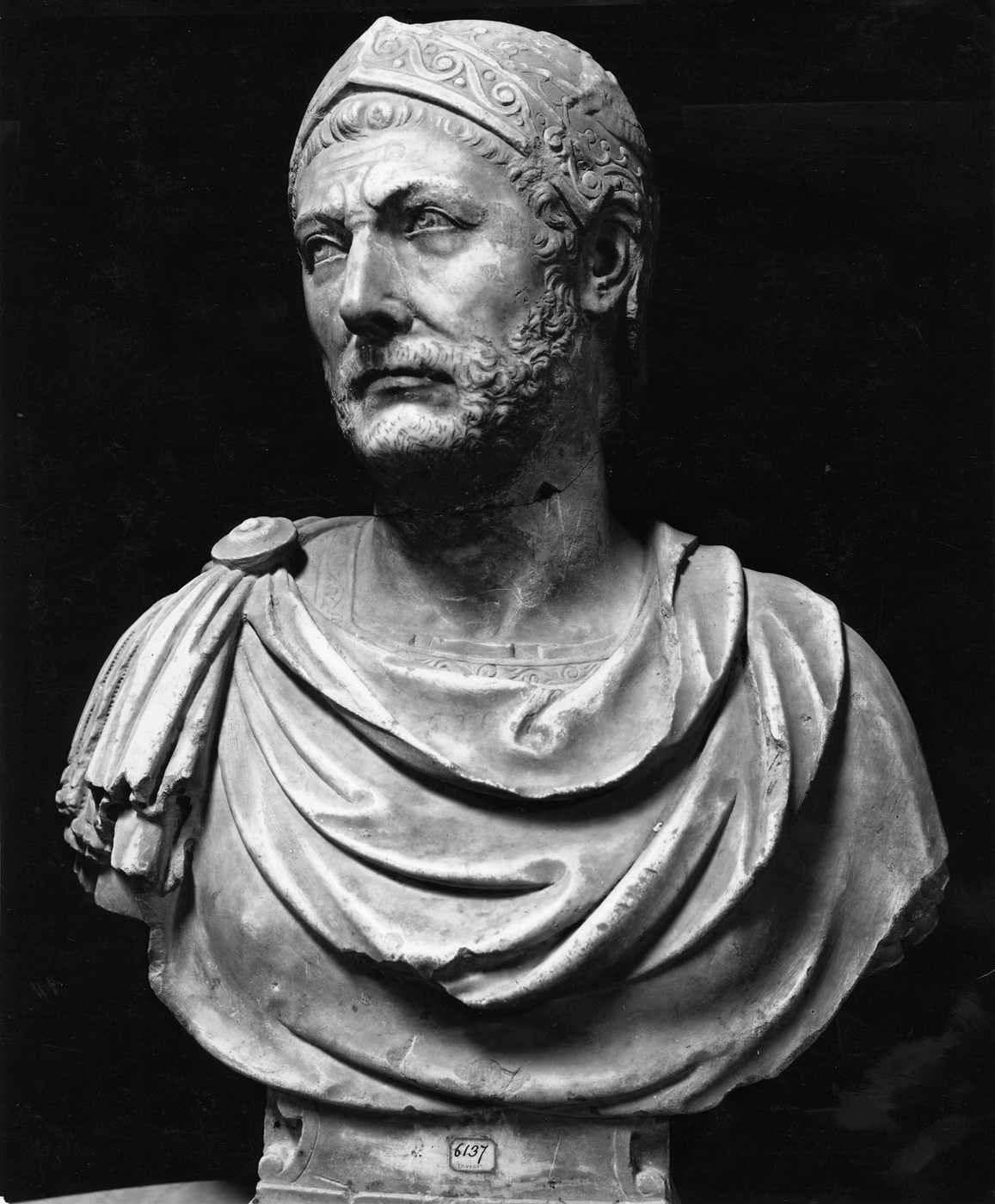
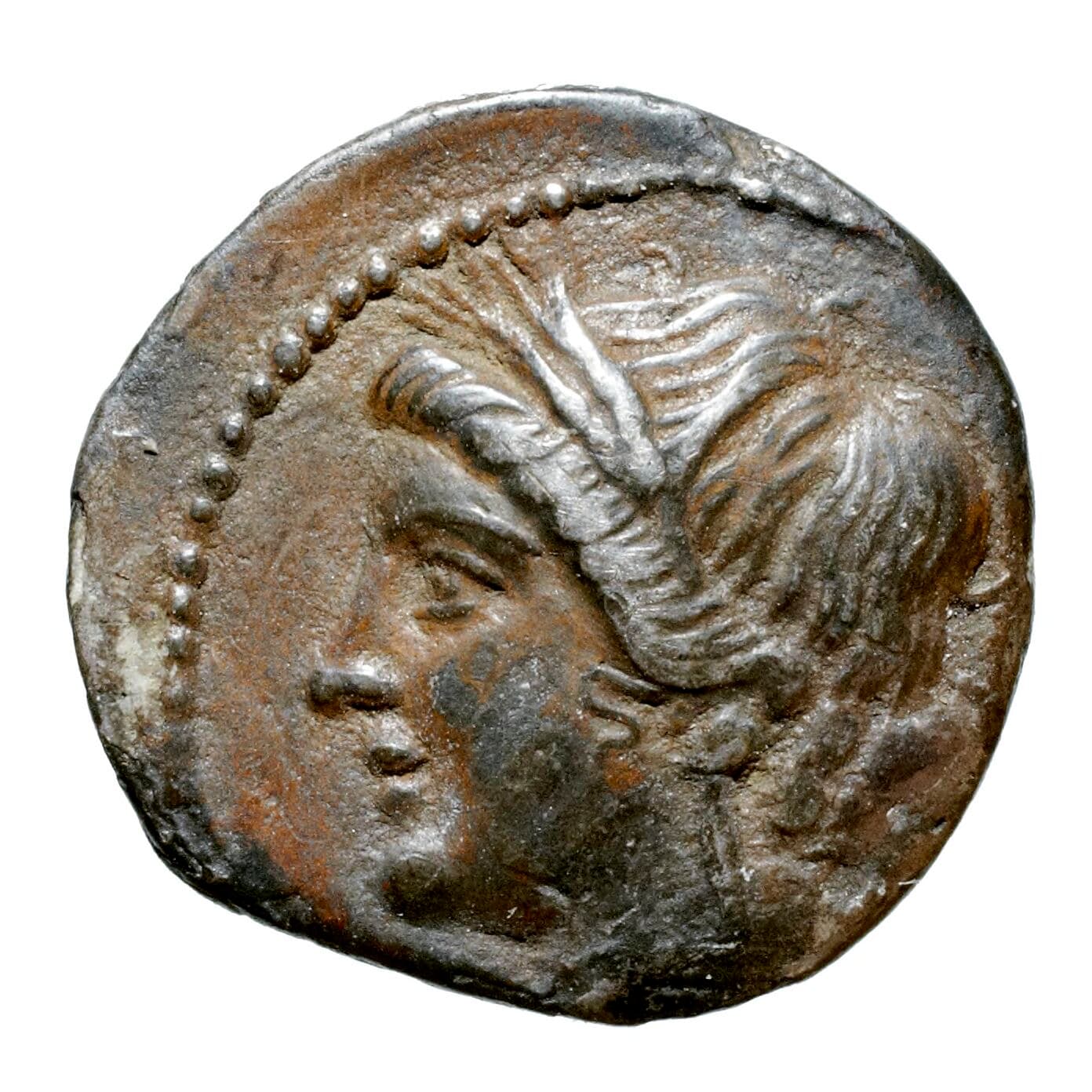
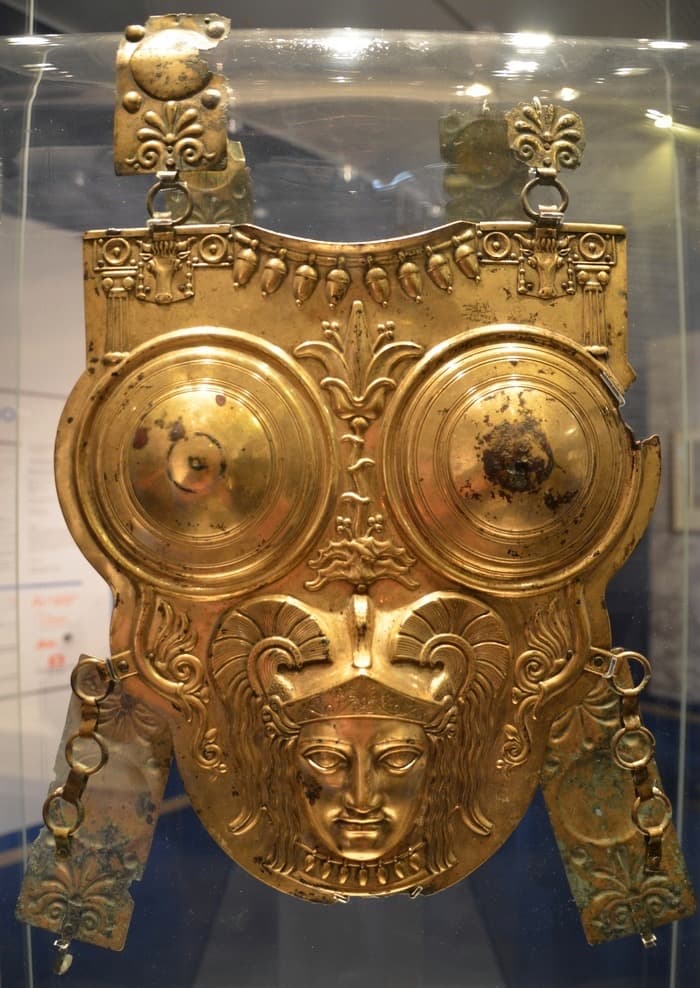
Rome kept his memory alive as a measure of fear. Hannibal ad portas — "Hannibal at the gates" — survived as a Latin byword for imminent danger. His city fared worse: Carthage was razed by Rome in 146 BC, six decades after his defeat at Zama, which is why his story reaches us almost entirely in his enemies' words. And one last honest note for a page about faces: no securely identified ancient portrait of Hannibal exists — no inscribed bust, no certain coin. Every face of Hannibal ever printed is a guess.